
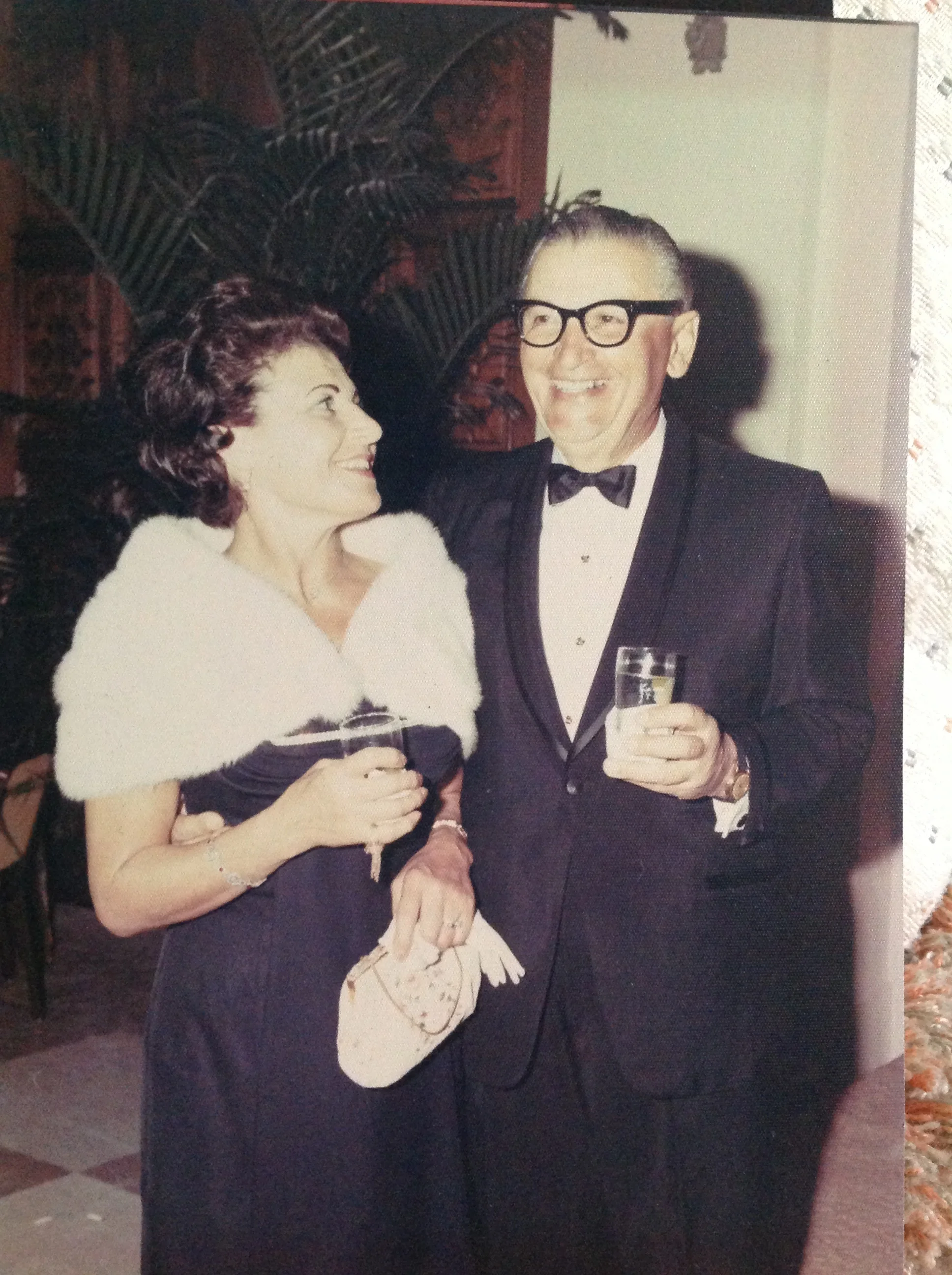
Beginning of French American Reeds
In 1939, they, Mario and Maria Maccaferri, established the French American Reeds Manufacturing Company in Paris, France, and created their first tie to the United States through the exportation of their reeds. Due to the international success of the Maccaferris’ reeds, the American businessman by the name of Gratz and Company readily approached Maccaferri about becoming partners. Gratz brought Mario and his family to New York and set them up in a hotel on 3rd Avenue. The first night the family was in the hotel, Maria was awakened by her baby. She turned on the lights and found bed bugs crawling around her daughter. They closed up their luggage and spent the night in the hallway. The next day they relocated to a better hotel. The bed bugs were an inauspicious sign of what Gratz was trying to do. While in New York, Gratz tried to convince Mario of a 51-49% deal. Gratz, a successful American businessman, attempted to trick this seemingly naive immigrant who had just arrived and was struggling with the language. Gratz, however, was not aware that he was dealing with the astute and confident man that Mario was. Mario told Gratz that just because he could not speak the language, it did not mean that he was stupid. Mario informed Gratz that he was going to take his machines and knowledge of reed manufacturing and establish a business of his own. The Maccaferris were well on the road to success in France when they departed for America. Instead of being a small successful reed manufacturer in Europe, the Maccaferris would move to America and dominate the reed market.
Coming to America
According to Mrs. Maccaferri, America was "wonderful" when they arrived. It was just coming out of the depression and the market was open for someone to take advantage of it, which is precisely what they did. The trip to New York was not a worthless one for the Maccaferris. Mario attended the 1939 New York World*s Fair, which sparked his interest in a new material: plastic. This material would have a profound effect on the Maccaferris’ lives in America and their pursuit of the American Dream. The Nazi Blitzkrieg was holding Europe, yet during a time of political lull in 1939, Mario returned to Paris to check on his reed business. Even though the countries were trying to formulate a peace treaty, Mario feared what might ensue and packed up two reed-cutting machines and two shaping machines and sent them to New York. At that time, one of Mario’s friends who worked in the Foreign Office called and told Mario that the truce was off, the Germans were about to take Paris, and departure seemed virtually impossible. Mario hung up the phone and rushed to the docks to find the harbor blockaded by German warships and the last ship allowed to leave, the Ile de France, was loading passengers and no more tickets were available. The following is a direct account of Mario Maccaferri’s escape from France relayed to Michael Dresdner in a 1982 story and reprinted in a 1995 Vintage Guitar Magazine article by Michael Wright. "I went down to the French Line, which was in the same building as the Embassies, and saw a line of people circling more than two blocks. "What am I going to do?" I thought.
At that time, I was wearing glasses I didn’t need them, but thought they looked good and sported a small mustache, a dark suit and a Honburg (hat). I knew I had to get in there, so I went to a place where they rented limos, hired one, and gave the chauffeur a $20 tip in advance. I told him, "Take me to the French Line. Drive right up to the entrance, get out of the car, open the door for me and salute me." When I got out carrying my briefcase, the two guards rushed over and saluted me and I walked right inside. "The room was empty, just columns and a skylight and I thought: "What the hell am I going to do now?" So I stood by one of the columns as if I were waiting for someone and watched as one man passed by a few times, going from one office to another. So I called him over. I had $10,000 in my pocket. I said to him, "I’ll give you ten thousand dollars if you get me on that goddamned boat. I’m going to stay right here, so make up your mind." "Anyhow, I got on the boat. When I got here (to New York), the Customs agent asked me if I had any money. I told him, "Yes, I have three dollars in my pocket." He said, "What do you think you are going to do with only three dollars?" I said, "I’m going to see my wife and baby, and then I’ll think about it."
Arrival in New York
Back in New York, 19 year old Maria Maccaferri, who did not know a word of English and had only the remains of the $25 check Mario left with her, was worried about her husband's return yet had faith that he would be home soon. She received a telegram from her husband that read, "I’ll be home tomorrow." She remembers grabbing her baby and dancing around the apartment filled with joy. Once rejoined with his family in New York, Mario set up the machines that he had sent over from France and began to run the French American Reeds company out of a factory on Broadway. Mario and Maria ran the business together: he was the idea and marketing person while she supervised production and ran the business. Mario continued making improvements on the design of his reeds, always improving on his own design. One day, Mario brought some samples with him to a Benny Goodman show and gave them to him. The very next day, Goodman paid Mario a personal visit at his factory and raved about how incredible the reeds were. Soon all the top musicians were visiting Mario asking him to fix their instruments. They began to use and professionally endorse his reeds in concert and on advertisements, never allowing payment from Mario. The endorsements combined with the war in Europe lead Mario to dominate the reed industry. In order to meet the increasing demand, Mario needed more machines to supply reeds, but the Second World War prohibited him from obtaining new parts to build the machines. With his ability to innovate and invent, Mario adapted the available machinery to suit his needs. He worked on the machines while at the office and at home. In their apartment, Mario made a draft board that fit on top of his daughter’s playpen. He was determined to meet the need of his customers as quickly as possible. Unfortunately, the war in Europe presented several other problems to Mario’s reed business. The imported French cane from which the Maccaferris produced their reeds was unavailable due to the war. After an unsuccessful attempt to grow cane in Arizona, Mario adapted and formulated a solution: plastic reeds. Upon the invention of the plastic reed, many in the music industry scoffed at Mario’s idea. How could a piece of thin plastic have the same quality and resonance as a piece of fine French cane? The scoffing ended when Benny Goodman came to Mario’s side, again offering praise to Maccaferri and his latest invention. The plastic reeds soon became the popular and endorsed choice of many Big Band stars.
Plastic Clothespins
The plastic reed was just the beginning of Mario’s career in the plastics industry. With his ability to foresee a window of opportunity, Mario invented the next piece of ingenious plastic work: the plastic clothespin. During the summer of 1944 when the Maccaferris were at their vacation home in the country, Maria noticed that she did not have enough clothespins so she asked Mario to go to the market in the village and buy some. When Mario asked the shopkeeper about clothespins, the shopkeeper replied that it was wartime and there were no clothespins to be had. Mario returned home and told Maria that he was going to the plant and would be back soon. That night, Mario brought home six prototypes for the plastic clothespin. After Maria hung her silk slip out to dry, she noticed two holes in it from the clothespins. The next day, Mario perfected the design and the plastic clothespin was born. Mario was able to foresee that a demand for the clothespin existed, and he sought to supply it as quickly as possible.
Mastro Plastics
Mario eagerly began to market the clothespins, and they became extremely successful. With the war in Europe, consumer goods were incredibly hard to come by and the people were eager to buy the clothespins. The clothespin market grew to the point that millions were produced daily. There was not even enough time to package them due to the fact that some retail stores would come every morning and fill large barrels with clothespins. This led the Maccaferris to establish Mastro Plastics Corporation, which would produce all of Maccaferri’s plastic creations that were to come. Once World War II was over, consumer goods became available and interest in the plastic clothespin fell; however, Maccaferri had already began to turn his attention towards his newest project: plastic tiles. As the soldiers returned to the States, houses were built at an alarming rate. Maccaferri improved the design and added the beveled edges to the plastic wall tile mold and began to produce millions of bath and kitchen tiles. All of the homes that were erected across the United States began to use the Maccaferri tiles.
Islander Ukelele
Mario would return to the origins of his plastic creation, the musical world, for his next undertaking. Maccaferri next sought to integrate the plastics and musical world to a greater degree with the invention of a plastic instrument. The first plastic instrument Mario tried was the plastic ukulele.
Mario encountered an initial problem when he began his endeavor: insufficient capital. Mario contacted Sonfield, an executive at RCA whom he knew through his connections with musical distributors. Mario asked for a $5,000 loan, and in return, Sonfield would receive the profit of the first 100 cases shipped each week. Mario hinted to Sonfield that he couldn’t guarantee that the idea would work or that he would repay the loan; nonetheless, Sonfield accepted.
This was wise decision on Sonfield’s part because soon he would pull in the profits of the deal. Maccaferri began working and in 1949, the Islander plastic ukulele was invented.
The popularity of the ukulele would grow as a result of Mario’s ingenious ability to foresee what the American market would support.
The popularity of Hawaiian music at the time and Arthur Godfrey lead to the popularity of the plastic ukulele among the kids of the Baby Boomers. Arthur Godfrey was an acclaimed radio entertainer and the host of two top rated television shows. A characteristic of Godfrey’s shows was his comedic songs played on a ukulele. Godfrey obtained the Islander Ukulele and endorsed it on his show as "a very good instrument that costs only $5.95." The next day Mario’s phone rang continuously. When Mario attempted to pay Godfrey for supporting his product, Godfrey refused. According to Maria Maccaferri, the ukulele would not have gone over quite as well in any other country, and Mario was well aware of this fact. Their homeland of France did not have the same interests in Hawaiian music and television icons, nor were there as many children there. There were many young consumers in America whose parents, the Baby Boom generation, were willing to buy the ukuleles for the cheap price. Almost every child in America had a plastic ukulele, and from 1949 until 1969, 9 million ukuleles were sold. The plastic ukulele was just the beginning of Mario’s career of making plastic instruments.
Plastic guitars and Beetles
The plastic ukulele served as yet another stepping stone to Maccaferri’s high ambition of making a plastic guitar. The plastic guitar debuted in the spring of 1953. In a speech about the plastic guitar given at the Waldorf-Astoria hotel in New York on April 29, 1953, Mario discussed the efforts that went into making his guitar: "I have always promised myself that one day I would make a good guitar at a popular price. I had no idea that I would end up by making a plastic guitar. But when I realized that plastic would offer me the chance to make a perfect instrument with none of the shortcomings known in the wooden guitar, it did not take long to decide and satisfy my life’s ambition. So, I went to work.
"This all-plastic guitar wasn’t an easy job, as you will understand, we had a lot of engineering problems and it represents quite a costly venture for us . . .It has beauty and it is easier to play (than wooden guitars) it produces music in perfect pitch, and has good tone and plenty of it." Mario was able to achieve instruments with such good quality because of his background as a musician and luthier. The early part of his life was spent as an apprentice to a guitar maker and as a classical concert guitarist. Not only was Mario gifted with business ingenuity but also with talent and skill as a musician which had a large effect on his success as an instrument maker.
Even though acclaimed guitarists reveled Mario’s invention, guitar players as a whole still regarded Mario as a "toy maker." These sentiments did not stop Maccaferri’s forward forge of the plastic instrument empire as he continued to produce many guitars of various styles, ranging in price and color. He then continued to formulate various other plastic instruments. In March of 1964, Maestro Industries, Inc. introduced the Beetles line at the Toy Show in New York. This line included four-string guitars, six-string guitars, plastic bongo drums, and plastic banjos. In 1965, the available line of plastic instruments included various guitars, ukuleles, wind instruments, and percussion instruments and productions and introductions of new variations continued for a few years thereafter.
RCA and the 8-track cassette
In 1967, Mario suffered a heart attack, which scared him and stimulated new thoughts about his businesses following his 1969 recovery. After the plastic guitars received a negative review, Mario decided that if people were going to criticize him, he would not give them anything to criticize. Mario said, "No more" and all partially and completely finished guitars were boxed up and stored. Mario also decided at the same time to get out of the plastic instrument business. It was sold to Carnival industries, which did not know what to do with the legacy. The Maccaferri plastic instruments were never made again. Mario was able to recognize an area in which he could no longer gain success. He accepted the idea of abandoning the plastic instrument production. He did not completely resign himself as unsuccessful, but instead refocused his attention to another endeavor. The end of the plastic instruments, however, did not terminate Maccaferri’s work in plastics. RCA approached Mario in 1970 with the idea for an 8-track cassette with plastic housing. Mario set to work and designed and produced the first 8-track cassette housing. RCA’s idea was copied and unfortunately, this major business opportunity closed out for Mario, who sold his housings to other companies. Eventually in the late 1970s, Maccaferri produced audiocassette tape housings.
Mario was able to manufacture these housings faster than other American companies because he had visited Italy and had purchased and brought back an Italian machine that rapidly produced cassette housings. Although he was unable to clinch the RCA deal, Mario was still able to find a niche that could quickly be filled with the rapid production of the audiocassette housings.
The Auction
In 1981, several factors changed the Maccaferris’ business life. Mario was tired of making cassette housings and wanted out of the plastics business, and the city of New York desired his building and purchased it from him. At age 80, Mario decided that instead of beginning again at a new location, it was time to stop the plastics business and he liquidated the factory. Later that same year, almost all of the equipment was auctioned off for what Maria calls "nothing," and Mario retired. According to Mrs. Maccaferri, the liquidation of the business was the hardest thing to see and endure. During the auction, Mario locked himself in his office and did not come out until it was over. To watch something that she and her husband had built stone by stone being torn apart and sold for virtually nothing was incomparable to any hardship that had endured up to that point.
Every time a moving truck would come to pick up the machinery, Maria would watch the truck drive away until she could not see it anymore. Tears would stream down her face as she cried and cried, saying good-bye to the building blocks of their success in America. During the auction, Maria was able to distract the auctioneer and convinced him not to auction off the reed business; she was determined to make it hers and hold onto their business roots. She asked Mario if she could have the reed business. Mario wanted her to retire, so he said she could have it if she paid for it. Maria said "ok," and Mario signed over the reed business to her. Although the plastic business had been sold and Maria now owned the reed business, Mario’s innovation and love for instrument making continued throughout his final years. He went to work at 7:30 a.m. everyday and worked diligently on various projects, including a traveling guitar that folded into itself and a plastic violin.
How do you get to Carnegie Hall?
Mario completed the violin project in 1990 when he was 90 years old, and it publicly debuted in Carnegie Hall. Although the critics were less than generous about the violin, Mario was celebrated by a number of chemical companies for his pioneering work in the field of plastics. Mario Maccaferri passed away on April 16, 1993, at the age of 92. Maria retired from the business in 2003 and continued to be a consultant to the business until her passing at the age of 92 in 2013.
Continued Legacy
In 2003 daughter Eliane moved the business to Jackson Tennessee where she continues to produce reeds and looks forward to new and exciting ways to market the Maccaferri reed.